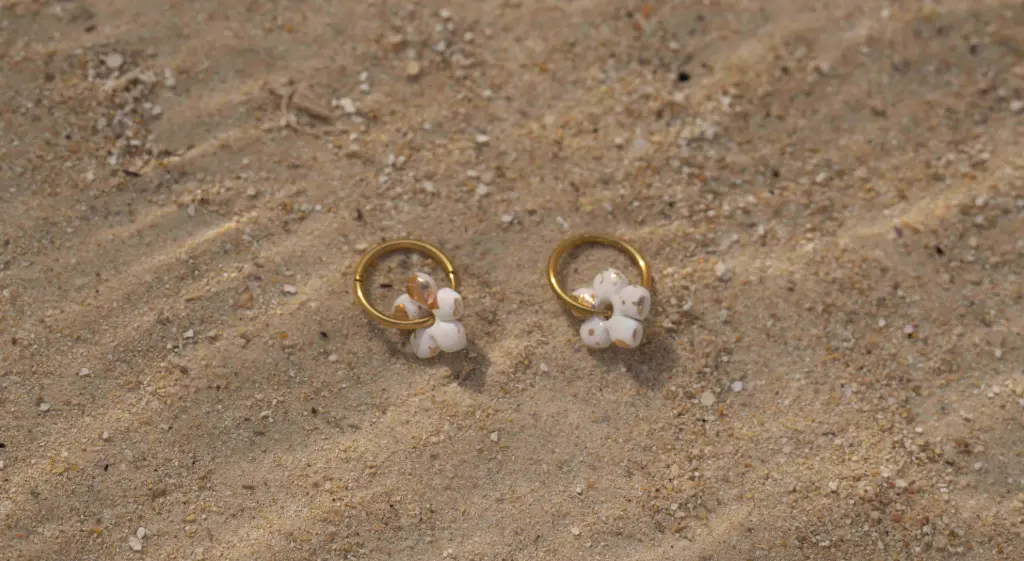
Our Commitment to Quality
✨ At Kréaïa, every pair of earrings is designed to last and shine over time. We have chosen 316L surgical stainless steel — renowned for its strength and skin-friendliness — as the foundation of all our creations. The gold models are enhanced with a Gold PVD coating, a high-end technology that ensures a radiant, long-lasting color. The silver-toned models, on the other hand, reveal the pure and luminous beauty of polished steel.
Our high standards are no coincidence: living in a tropical climate requires jewelry able to withstand humidity, seawater, and perspiration. That is why we have chosen premium materials and processes, ensuring that your earrings retain their brilliance day after day, season after season.
What exactly is PVD?
Jewelry jargon can sometimes feel like a puzzle, especially when you are new to this world. Among the terms that spark curiosity are these three letters: PVD. So, what exactly does it mean?
Definition
PVD stands for Physical Vapor Deposition. It is a technology that coats a metal object with an extremely thin layer of metal, deposited in vapor form. In other words, it is a clean and highly precise metallization process.
The Different Techniques Used
There are several ways to achieve PVD plating:
- Vaccum Evaporation : the piece is placed inside a sealed chamber, where the metal is heated until it become vapor. The vapor then settles in a uniform and precisely controlled layer.
- Sputtering : microscopic metal particles are projected at high speed onto the surface to be coated. The result is a thin, uniform, and highly resistant layer.
- Ion Beam Assisted Deposition : in this method, electrically charged ions “bombard” the surface. This process densifies the coating, improves adhesion, and smooths out small imperfections.
In practice, titanium or chrome is often used as a base, before adding a precious finish such as gold or an alloy.
On which metals can PVD be applied?
PVD can be applied to many materials, but it is particularly effective on stainless steel. This is what makes it possible, for instance, to create “golden steel” without altering its properties. The coating thickness generally ranges from 1 to several microns.
The Process in Practice
It all begins in a vacuum chamber, a sealed environment where the air is almost completely removed to prevent any impurities. The jewelry pieces are suspended on a carousel, slowly rotating to ensure an even distribution. Then, a specific gas is injected and the deposition phase begins. In the end, the pieces emerge with a uniform, radiant, and durable coating.
The Advantages of PVD
- A wide palette of colors : thanks to the reactive gases and temperatures used, a great variety of shades can be achieved.
- An eco-friendly process : unlike traditional electroplating, PVD requires no chemical baths, no electrolysis, and produces no toxic waste.
- Enhanced resistance : the jewelry is protected by an extremely hard layer (often titanium nitride–based), making it far more durable than traditional electroplated coatings.
👉 In summary: PVD is the perfect balance of aesthetics, durability, and environmental responsibility. No wonder it has become a standard in fine jewelry and high-end watchmaking — and a natural choice for Kréaïa.
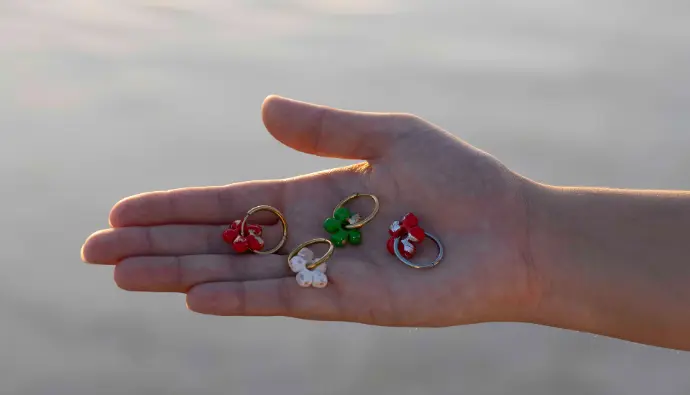
Surgical Stainless Steel Jewelry
316L surgical stainless steel is a noble, hypoallergenic, and non-tarnishing metal that ensures your jewelry remains elegant, comfortable, and radiant — even with everyday wear.
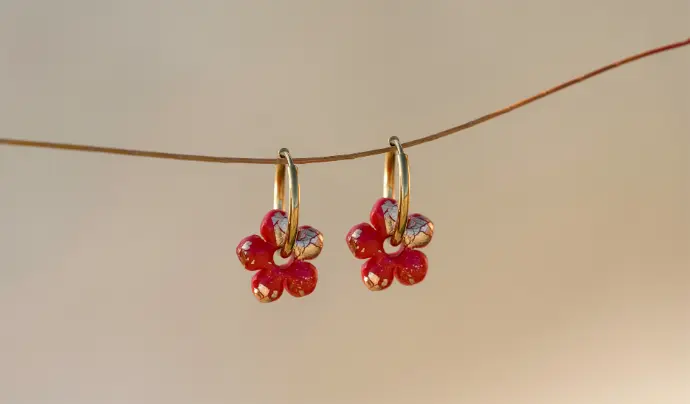
Gold PVD
Durable Gold PVD enhances your jewelry with a refined, resilient brilliance, offering a color that endures over time without fading.
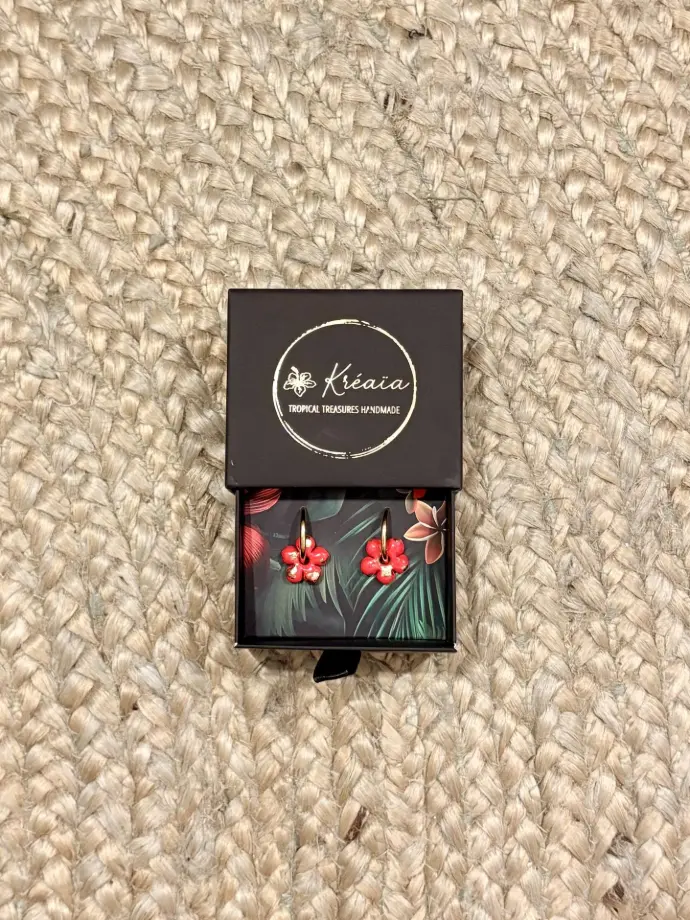
Premium packaging
Each Kréaïa jewel is presented in a refined case adorned with elegant tropical motifs, designed to highlight your creation as much as to protect its brilliance. More than simple packaging, this premium case embodies our craftsmanship and transforms every purchase into a true luxury experience.